There was a time when the word “ranching” conjured images of open ranges, weathered barns, and endless fields under a silent sky. That picture still exists, but the perception about it has changed today. It’s framed by something far more sophisticated. Modern ranching is no longer defined by the number of acres a producer owns, but by how intelligently those acres are managed. It’s not a question of how much land you have, but how much you respect it.
A silent revolution is changing the way lamb is grown, prepared, and served across the United States. This change is motivated by a sense of duty to the land, the animals, and the customers who genuinely care about both. Although American lamb production has always been rooted in history, it is currently serving as an example of how innovation and legacy can coexist together.
Superior Farms has long stood at the center of this evolution, demonstrating how responsible ranching can scale without losing authenticity. With partnerships spanning hundreds of family ranchers and a focus on sustainability, the company has helped redefine what “American lamb” means in a marketplace dominated by imports. Yet the broader movement toward responsibility runs deeper than one brand – it’s a collective rethinking of what stewardship in agriculture truly looks like.
A New Kind of Tradition
American ranchers have relied on a lot of outer factors like weather patterns, grazing cycles, and market demand for decades to sustain their livelihoods. However, “business as usual” is no longer relevant as customer expectations change and climate variability rises. The modern adaptation of an ancient craft is responsible ranching. While it requires accountability, it respects tradition.
This entails growing animals with an eye on long-term ecological balance as well as output. It entails realizing that healthier animals result from healthy soil and that healthier food systems follow. Today, the American lamb industry is being redefined by this type of regenerative thinking.
The modern rancher is as much a scientist as a herdsman. They study water tables, analyze soil composition, and monitor carbon cycles with the same diligence once reserved for rainfall. They’re guided by data but grounded in instinct – knowing when to intervene and when to let nature take its course.
The Science of Stewardship
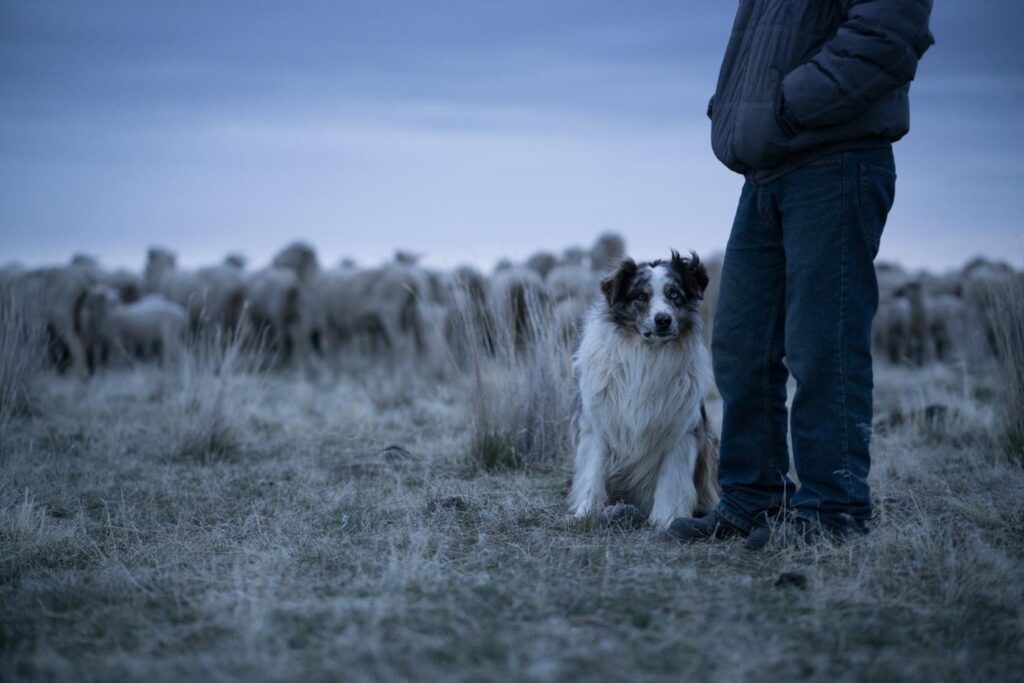
The biggest misconception about ranching is that it’s simple. In reality, it’s really complex because you need to strike that perfect balance between nature and human need. So, each decision you make, be it pasture rotation or feed quality, every bit has the potential to affect an entire ecosystem.
Nowadays, responsible ranchers employ rotational grazing techniques, which let grasslands regenerate organically, promoting biodiversity and lowering runoff and erosion. To overcome water constraints, some experiment with drought-resistant fodder crops, while others incorporate renewable energy sources like solar panels on barns and wells.
This shift is more economical than environmental. By treating sustainability as a business strategy rather than an expense, ranchers are finding that stewardship strengthens profitability. Healthier land yields better forage. Better forage means healthier lambs. Healthier lambs produce higher-quality meat
Animal Welfare as an Ethical and Economic Imperative
If you’ve ever been a part of any agricultural conversations, especially those that revolve around ethics, “animal welfare” is a phrase you must’ve heard often. And, in responsible ranching, it’s also an operational pillar. Stress-free animals produce better-quality meat – a fact that’s been proven through decades of research.
To guarantee humane conditions, contemporary ranchers are improving everything from herding methods to transportation strategies. Here, technology is subtle but essential: temperature-controlled transportation, remote flock monitoring, and cutting-edge veterinary treatment are now commonplace.
However, philosophy is where the true distinction lies. The younger generation of ranchers views animal welfare as a reflection of their skill rather than as an external rule. A properly-raised animal is a sign of expertise as well as compassion.
Local Sourcing and the American Advantage
Imported lamb from countries like Australia and New Zealand has long dominated the U.S. market, but consumer preferences are shifting. Americans are increasingly asking where their food comes from, and they’re choosing freshness, traceability, and domestic origin over long-distance imports.
That demand is supported by ethical ranching. American producers can guarantee fresher products, reduced transportation emissions, and stronger regional economies by cutting supply chains.
Purchasing American lamb is now a sensible decision as well as a patriotic one. Greater transparency, fewer mileage, and fewer middlemen are all benefits of local sourcing. Furthermore, responsible ranching is both a movement and a promise as more people become aware of the economic and environmental benefits of eating food raised locally.
The Future of Responsible Ranching
As the American lamb industry continues to evolve, responsibility isn’t an optional path; it’s the only sustainable one. Climate uncertainty, shifting consumer values, and global competition have all forced the industry to adapt – but in that adaptation lies opportunity.
Ranchers are proving that sustainability and profitability can coexist. They’re showing that ethical production doesn’t weaken margins; it strengthens them. And as this philosophy spreads, it’s quietly redefining what it means to raise lamb in America.
After all, responsible ranching is a testament to the idea that when land, livestock, and livelihood exist in harmony, everyone benefits.